We Will Be Closed Saturday, Oct 17 (no DVM coverage), as well as Saturdays Oct 31 & Nov 14.



Diagnostics for Better Pet Health
Veterinary diagnostics refers to the various tests and procedures used to diagnose and monitor the health of animals. These tests can range from blood snap tests to X-rays and ultrasounds, and they are essential in detecting and treating illnesses and diseases in animals. At our Dwight, IL veterinary facility, we can provide diagnosis & treatment sooner!
In-house Laboratory Testing
At Dwight Veterinary Clinic, we can perform several in-house tests such as the heartworm snap test which includes testing for three additional tick-borne diseases: Lyme, Ehrlichia and Anaplasmosis, FIV/FeLV snap test, parvo snap test, urinalysis, cytology, and intestinal parasite testing. We also have an in-house digital X-ray and offer ultrasound by appointment.
Heartworm Snap Test
Heartworm disease is a serious and potentially fatal condition that affects dogs and cats. It is caused by a parasitic worm that is transmitted through mosquito bites. The heartworm snap test is a quick and easy way to detect the presence of heartworms in your pet’s blood. This test is recommended for all dogs and cats, especially those living in areas with a high mosquito population. The test for dogs also includes testing for Lyme, Ehrlichia and Anaplasmosis, three tick-borne diseases.
Some common signs of heartworm infection include:
- Coughing
- Difficulty breathing
- Lethargy
- Weight loss
- Poor appetite
- Vomiting
- Diarrhea
- Swollen abdomen
FIV/FeLV Snap Test
FIV (Feline Immunodeficiency Virus) and FeLV (Feline Leukemia Virus) are two common viral infections that affect cats. These viruses weaken the immune system, making cats more susceptible to other infections and diseases. The FIV/FeLV snap test is a simple blood test that can detect the presence of these viruses in your cat’s blood. Early detection is crucial in managing these infections and preventing them from progressing.
Symptoms of FIV and FeLV may not be apparent until the disease has progressed. Some common signs to watch out for include:
- Lethargy
- Weight loss
- Poor appetite
- Vomiting
- Diarrhea
- Swollen lymph nodes
- Pale gums
- Difficulty breathing
- Seizures
Parvo Snap Test
Parvovirus is highly contagious and potentially deadly virus that affects dogs. It is spread through contact with infected feces and can cause severe gastrointestinal symptoms. The parvo snap test is a quick and accurate way to diagnose parvovirus in dogs. Early detection is key in treating the virus and preventing it from spreading to other dogs.
Urinalysis
Urinalysis is a diagnostic test that involves analyzing a sample of your pet’s urine. It can provide valuable information about your pet’s overall health, including kidney function, urinary tract infections, and diabetes. This test is often recommended as part of a routine check-up for pets.
Cytology
Cytology is the study of cells and is an important tool in diagnosing various diseases and conditions in animals. It involves collecting and examining cells from different parts of the body, such as ears and skin. Cytology can help identify infections, tumors, and other abnormalities in your pet.
Intestinal Parasite Testing
Intestinal parasites are a common problem in pets, especially in puppies and kittens. These parasites can cause a range of health issues, including diarrhea, weight loss, and anemia. Intestinal parasite testing involves examining a stool sample for the presence of parasites. Early detection and treatment are crucial in preventing these parasites from causing harm to your pet. Skin scrapings are also used to test for external parasites, such as mites. A small sample of your pet’s skin is scraped and examined under a microscope for the presence of these parasites.
Pet X-Ray
Pet X-rays, also known as radiographs, are images of the internal structures of an animal’s body. They are used to diagnose a variety of health conditions, including broken bones, foreign objects, and internal organ abnormalities. X-rays use a small amount of radiation to create images of the body’s structures, which can then be analyzed by a veterinarian to determine the cause of an animal’s symptoms.
How Are They Performed?
The process of taking X-rays for animals is very similar to that of humans. The animal is positioned on a table or held by a technician while the X-ray machine is positioned above them. The X-ray machine emits a small amount of radiation, which passes through the animal’s body and creates an image on a special film or digital sensor. The animal must remain still during the process to ensure clear and accurate images. In some cases, sedation may be necessary to keep the animal calm and still during the procedure.
Benefits of X-rays for Diagnostics
There are several benefits to using X-rays for veterinary diagnostics. One of the main benefits is that they are non-invasive, meaning they do not require any incisions or injections. This makes them a safe and relatively painless option for diagnosing health issues in animals. X-rays are also quick and efficient, allowing veterinarians to get a clear picture of the animal’s internal structures in a matter of minutes. This can be especially important in emergency situations where time is of the essence.
Digital Dental X-ray
Some dental issues may not be visible to the naked eye, which is where digital dental X-rays come in. Digital dental X-rays use low levels of radiation to capture images of the inside of your pet’s mouth. These images can reveal any hidden dental issues that may not be visible during a physical examination. This allows veterinarians to diagnose and treat dental problems before they become more serious.
Digital X-rays are also beneficial because they provide a more detailed image compared to traditional X-rays. This allows veterinarians to see the entire tooth, including the root and surrounding bone, which can help in identifying any underlying issues.
Pet Ultrasound
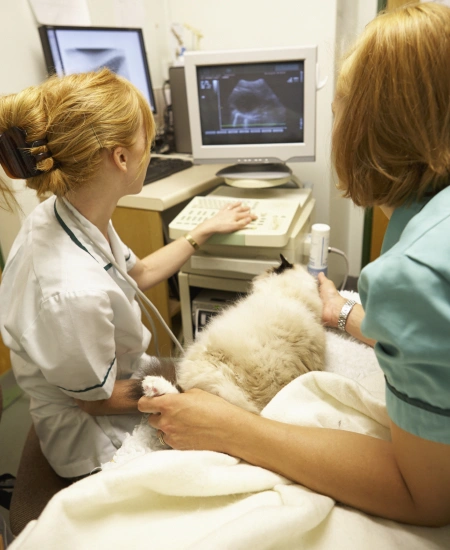
Pet ultrasound is a valuable tool used to diagnose and monitor various health conditions in animals. This non-invasive imaging technique uses high-frequency sound waves to produce images of the internal structures of an animal’s body.
* This diagnostic tool is offered by appointment only.
What it Diagnoses
Veterinary ultrasound can be used to diagnose a variety of health conditions in animals. It is commonly used to examine the abdominal organs, such as the liver, kidneys, and spleen. It can also be used to evaluate the heart, lungs, and reproductive organs. In addition, ultrasound can be used to detect tumors, cysts, and other abnormalities in the body.
The Veterinary Ultrasound Procedure
The veterinary ultrasound procedure is a relatively simple and painless process that can be performed in a veterinarian’s office. Before the ultrasound procedure, your pet may need to be fasted for a certain period to ensure that the stomach and intestines are empty, allowing for better visualization of the internal structures. Your pet may also need to be sedated if they are anxious or uncooperative.
Your pet will be positioned in a way that allows the veterinarian to access the area of interest. This may involve lying on their side, standing, or being held by an assistant. A gel may be applied to the area being examined to help the sound waves travel through the skin and produce clear images. The gel also helps to eliminate any air pockets that may interfere with the sound waves.
The veterinarian then uses an ultrasound probe, also known as a transducer, to emit sound waves into the body. The probe is moved over the area of interest, and the sound waves are directed into the body. As the sound waves bounce back to the probe, they are converted into images on a screen. The veterinarian can adjust the settings on the ultrasound machine to produce different types of images, such as 2D, 3D, or Doppler images.
The images produced by the ultrasound machine are then interpreted by the veterinarian. They will look for any abnormalities or changes in the internal structures and make a diagnosis based on their findings.
Allergy and Dermatology
At Dwight Veterinary Clinic, we are trained to treat a wide range of disorders that affect the skin, ears, hair, and nails. Our medical team is also experienced in immunology and allergies to care for patients with allergic-induced skin conditions, skin cancer, parasitic infections, chronic ear infections, autoimmune diseases, endocrine disease, and peri-anal furunculosis.
Allergy Testing
Like humans, pets can be allergic to substances they breathe, eat, and touch. If you notice your pet scratching, chewing, developing ear infections, having hot spots, vomiting, or diarrhea, they may be having an allergic reaction. Help your companion by being aware of the symptoms and paying attention to the changing seasons.
At Dwight Veterinary Clinic, we test for allergens by collecting and analyzing a blood sample, which reveals the substance your pet is reacting to. Many pets tend to be allergic to more than one substance.
Types of allergens
- Contact allergens: grass/weeds, fleas, wool, and household cleaning products
- Inhaled allergens: weeds, pollen, dust, dust mites, and mold spores
- Food allergens: wheat, grains, protein sources such as chicken, beef, and pork.